

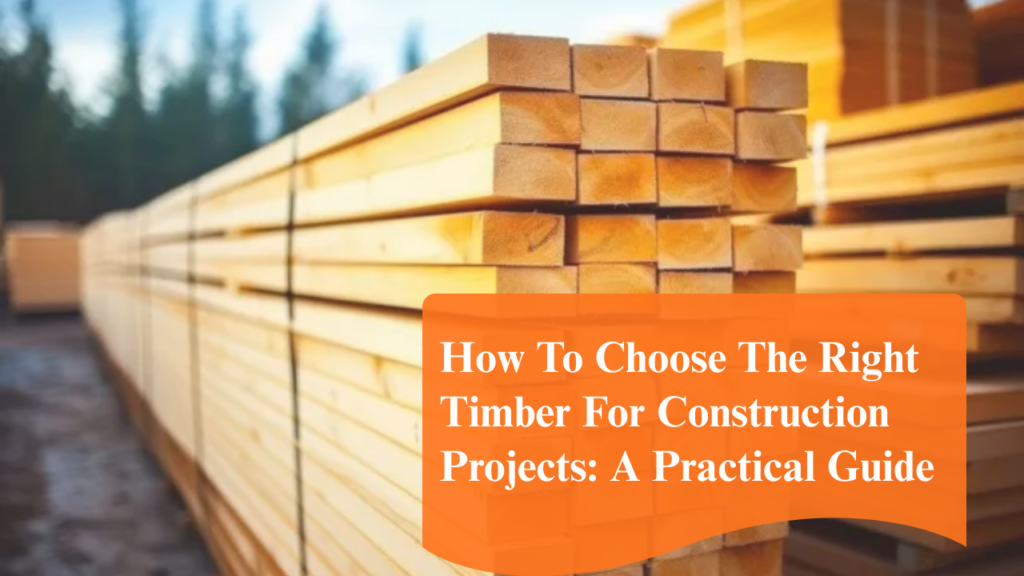
Choosing timber for a construction project sounds simple until you have to make the real decision. Wood may look similar, but the right choice depends on strength, moisture, grade, treatment, and use location.
That is why timber selection should never be based solely on price. Good timber helps a structure stay stable and perform well on site. This blog will discuss the ways you can adopt to choose timber for construction projects.
Why Timber Choice Matters In Construction
Timber is used in framing, roof members, trusses, wall systems, formwork, joinery, and support applications. But not every piece of wood is fit for every job. In timber construction, the right material must match the load, the environment, and the required level of finish.
The American Wood Council notes that wood is widely used because it is strong, adaptable, and easy to work with, while the U.S. Forest Products Laboratory explains that design values depend on species, grade, size, and condition.
A wrong choice can create problems later. Timber that is too wet may shrink after installation. Timber with the wrong grade may not carry the load expected. Untreated timber used in the wrong place may be subject to decay or insect infestation. These are avoidable mistakes when the selection process is clear.
The Wood Handbook explains that framing lumber is usually dried to an average moisture content of around 15 percent, not more than 19 percent, because moisture content affects performance and stability.
Start With The Job, Not The Species
The best way to choose timber is to begin with the use case. Ask what the wood is for. Is it carrying a structural load? Is it exposed to the weather? Will it stay visible after the job is done? Does it need treatment? Does it need a smooth finish?
These questions matter because the best wood for structural framing is not always the best wood for exposed finish work. A project review should cover:
- where the timber will be used
- How much load must it carry
- whether it will stay dry or face moisture
- whether it touches concrete or ground
- whether appearance matters
- whether code or treatment rules apply
Starting this way makes selection easier and avoids buying timber that looks right but performs badly.
Understand Timber Grade Before You Buy
Grade is one of the most important parts of timber selection. Two boards from the same species can perform very differently if they are graded differently. The U.S. Forest Products Laboratory explains that lumber grades are tied to characteristics such as knots, grain slope, checks, and other factors that affect strength and use.
For structural work, grade matters because it affects allowable design values. In simple terms, higher structural grades are used for demanding load-bearing applications. Lower grades may still be useful, but often for nonstructural uses, temporary uses, or places with lower appearance or strength demands.
A buyer should always check:
- species or species group
- grade stamp
- moisture mark such as KD
- treatment mark if relevant
If the timber does not clearly show these details, it is harder to confirm fit.
Check Moisture Content Early
Moisture content is often ignored until problems show up later. But moisture affects movement, twisting, shrinking, and long-term fit. The Wood Handbook says softwood framing lumber is usually dried to an average moisture content of around 15 percent, with 19 percent as a common upper limit for framing use.
If very wet timber is installed in a dry environment, it may shrink after installation. That can affect walls, floors, and finishes. Dry, stable timber is usually easier to work with and more predictable.
This is why kiln-dried timber is often preferred for framing and interior work. It helps reduce movement and supports more consistent construction results.
Know When Pine Timber Makes Sense
Pine timber for construction is popular because it is widely available, workable, and used in framing, packaging, and the building supply industry. Kamath Woods specifically identifies pinewood products as part of its construction supply focus.
Pine can be a practical choice when the project needs:
- good availability
- easy cutting and fastening
- framing-friendly material
- cost control on larger volume orders
But pine is still not one single answer for every project. The key is not just picking pine. The key is choosing the right grade, moisture level, and treatment condition of pine for the actual job. That is what makes pine timber for construction useful in practice.
Think About Exposure And Treatment
One of the biggest timber mistakes is using untreated wood where moisture, insects, or decay risk are higher. Building codes and wood design guides often require preservative-treated or naturally durable wood when timber is exposed to certain conditions. ICC code materials and AWC deck guidance both point to preservative-treated or naturally durable wood for higher-risk exterior conditions.
This means you should ask:
- Is the timber indoors or outdoors?
- Will it touch masonry, soil, or concrete?
- Will it face repeated wetting?
- Is insect risk a concern?
If the answer to these questions is yes, treatment becomes a serious part of the decision.
Look At Size, Span, And Load
The best wood for structural framing is not only about species. It is also about member size, span, spacing, and load. A small board may be fine in one wall, but wrong for a longer span or heavier roof load. The American Wood Council’s engineering publications make clear that wood design depends on grade, dimensions, load conditions, and design standards, not on appearance alone.
Structural timber should be chosen with design information in mind. The timber has to match the job’s real load path.
Storage And Handling Matter Too
Good timber can still become a poor choice if it is stored badly. APA guidance on framing and engineered wood handling stresses the need to protect wood products from excess moisture and poor site storage.
On-site, timber should be:
- kept off the ground
- protected from standing water
- covered in a way that still allows ventilation
- checked for damage before use
Even well-selected timber can warp or degrade if site handling is careless.
A Simple Timber Selection Checklist
Before you place an order, review this checklist:
- Confirm where the timber will be used
- Check if the use is structural or nonstructural
- Verify grade and grade stamp
- Confirm moisture condition
- Check if treatment is needed
- Match size to span and load
- Review storage plans before installation
Conclusion
Choosing timber well is really about matching wood to the job. In timber in building construction, the right decision comes from load, grade, moisture, treatment, and exposure, not from looks alone.
The best wood for structural framing is the wood that meets the design need clearly and safely. Pine timber for construction can be a practical choice when the grade, dryness, and treatment match the project conditions.
Builders who slow down and check these basics usually avoid expensive mistakes later. Kamath Woods reflects that practical supply-side role by focusing on pinewood products for construction and related industries.