

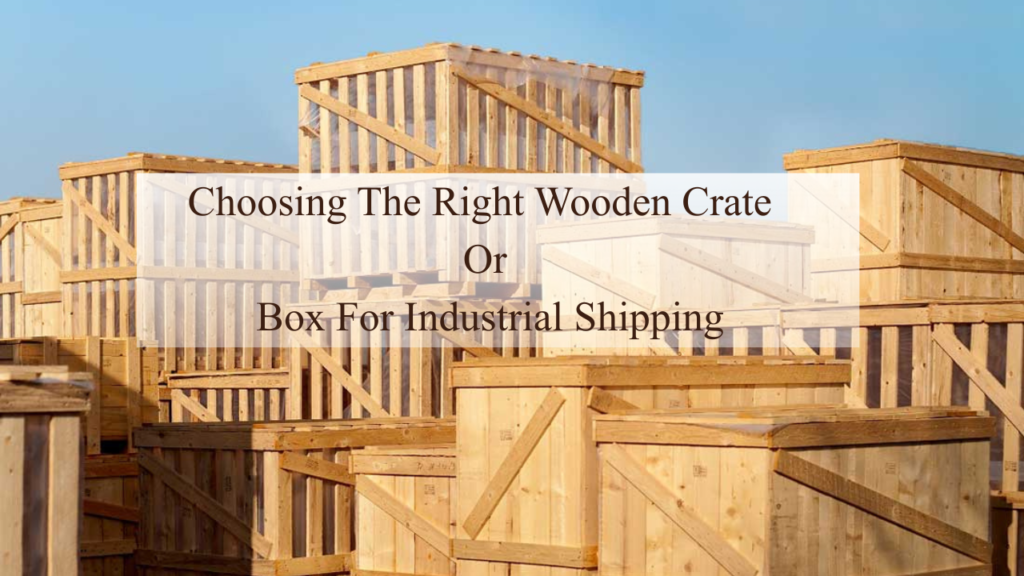
Choosing the right wooden crate or box is not only about size. It is about protection, handling, export rules, and shipping risk. A weak package can fail during lifting, stacking, vibration, or long storage. A package that is too heavy can also cost money and take up space.
This blog will discuss the ways to choose the right wooden crate or box for industrial shipping
Start With The Product, Not The Package
The first step is to study the item being shipped. Look at its weight, size, center of gravity, surface finish, and fragility. A metal machine part, a motor, and a control panel do not need the same type of box. Good industrial packing box design starts with the product’s shipping risk, not with a standard box size. That is why custom sizing, internal blocking, and material thickness matter in industrial shipping.
Ask simple questions first:
- Is the item heavy for its footprint?
- Does it have exposed edges or sensitive parts?
- Will it move by forklift, crane, or both?
- Will it travel locally or for export?
- Will it face stacking, moisture, or transit?
These answers shape the crate or box choice more than anything else.
Know The Difference Between A Pallet And A Crate
Many buyers still confuse a pallet with a crate. The difference between a pallet and a crate is simple. A pallet is an open base that supports goods for lifting and movement. A crate adds a framed or enclosed structure around the product. A box usually gives more enclosure than a basic crate. In practice, this means a pallet is mainly for support and handling, while a crate or box is for protection. That basic distinction is important when the shipment has fragile surfaces, odd shapes, or a high risk of impact during transit.
If the product can safely sit on a base and be wrapped, a pallet may be enough. If it needs side protection, top protection, internal bracing, or export-ready enclosure, a crate or box is usually the better answer.
Choose Between An Open Crate And A Closed Box
An open crate works well when the shipment is heavy, strong, and not sensitive to dust or light contact. It gives structure without fully enclosing the item. This can reduce weight and make inspection easier.
A closed wooden box is better when the product needs stronger protection from weather, dirt, impact, or tampering. It is also a more common choice when export wooden box requirements include clear treatment marks and more formal packaging control for international movement. ISPM 15 applies to raw wood packaging material used in international trade, including crates, boxes, pallets, and dunnage.
Check the Wooden Crate Load Capacity Early
Wooden crate load capacity should never be treated as a guess. It depends on timber section size, panel thickness, base design, fasteners, skid layout, and how the load is distributed within the package. A crate may hold a certain weight when the load is evenly distributed, but it may fail if the same weight is concentrated in a small area. That is why internal supports and load distribution matter as much as outer dimensions.
In simple terms, do not ask only, “How much weight can this crate carry?” Also ask, “How is the weight sitting inside the crate?” A heavy motor with narrow feet loads the base very differently from a machine with a wide frame. Good industrial packing box design always matches the base, side framing, and internal blocking to the real load pattern.
Plan For Handling And Transit Conditions
A strong box can still fail if it is built for storage but not for handling. Think about how the package will move through the chain. Forklift entry, crane lifting points, stacking needs, and truck vibration all affect the design.
For example:
- Forklift handling needs enough clearance and base strength.
- Crane lifting may need stronger skids or lift points.
- Export trips may involve longer storage and more humidity.
- Repeated handling increases the risk of impact at the base and corners.
This is where custom wooden shipping boxes often make more sense than generic ones. A custom design can match the lifting, stacking, and transport pattern instead of forcing the product into a box that was never designed for it.
Understand Export Wooden Box Requirements
If the shipment is going overseas, export rules matter early. The best-known standard is ISPM 15. The IPPC explains that the standard covers wood packaging material made from raw wood and requires approved treatment and marking to reduce the spread of pests in international trade.
APHIS says that regulated wood packaging material used to support, protect, or carry cargo into the United States must be treated and certified under ISPM 15, and the same standard applies to exports.
This means ISPM-15 wooden crates usually need:
- approved treatment, such as heat treatment
- proper marking with the official ISPM 15 stamp
- debarked wood
- compliance before export movement
Official guidance also notes some exemptions. Wood packaging made entirely from processed wood such as plywood, OSB, or veneer is generally outside ISPM 15, and wood 6 mm thick or less is also exempt.
Do Not Ignore The Inside Of The Box
Many shipping failures happen inside the box, not outside it. A strong outer shell cannot prevent a load from shifting, tipping, or rubbing during movement. Internal blocking, bracing, padding, and tie-down points are a key part of industrial packing box design.
Use the inside of the crate or box to control:
- movement
- tipping
- vibration
- contact between parts
- pressure on weak surfaces
The more valuable or irregular the shipment is, the more important the inside design becomes.
When Custom Wooden Shipping Boxes Are Worth It
Custom wooden shipping boxes are worth considering when the product has unusual dimensions, high value, poor center of gravity, or strict export requirements. They are also useful when the item must fit container space efficiently or when repeat packaging is required for regular shipments.
A standard box may work for simple, low-risk goods. But for machinery, engineered parts, or export loads, a custom solution often reduces overall risk. It can reduce damage, improve handling, and make marking and compliance easier.
Conclusion
Choosing the right wooden crate or box means matching the package to the shipping job. Start with the product. Understand the difference between a pallet and a crate.
Check the wooden crate load capacity based on true load distribution, not rough estimates. Review export wooden box requirements before the shipment is built, especially for ISPM-15 wooden crates. Then focus on internal support, handling method, and whether custom wooden shipping boxes will reduce risk.
Kamath Woods reflects this practical approach by supplying heat-treated pallets, crates, and boxes with the markings and documentation needed for smoother industrial and export movement.