

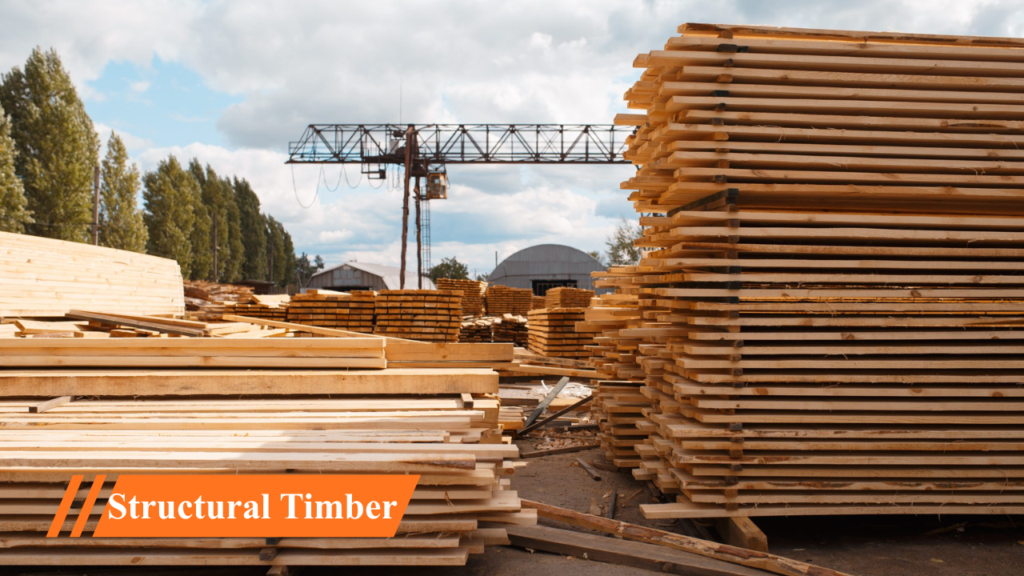
Structural timber is a widely used building material. It is used in roofs, walls, floors, beams, and framing systems. But many people still think timber is just “wood.” In real construction, that is not enough. Structural timber is selected based on strength, grade, size, moisture content, and end use.
That is why timber selection matters. A piece of wood may look fine on the surface and still be the wrong choice for a load-bearing job. We at Kamath Woods supplies pinewood products for construction and industrial use, making this topic relevant to builders and buyers who need timber that performs on-site.
What Structural Timber Really Means
Structural timber is timber used to carry a load in a building. That can include wall studs, rafters, joists, purlins, beams, and framing members. The American Wood Council explains that wood used for structural work is assigned design values and selected based on species, grade, size, and service conditions. The USDA Wood Handbook also notes that the properties of structural lumber depend on more than appearance alone.
In simple terms, structural timber is not chosen because it looks good. It is chosen because it can safely do a job.
Why Strength Matters In Structural Timber
Strength is the first thing most people think about. A structural member must resist bending, compression, tension, and shear while staying stable under service conditions. That is why load-bearing timber must be chosen with real structural performance in mind, not just cost or availability.
The American Wood Council’s design resources make clear that wood design values are adjusted for service conditions and actual use. That means the same timber may perform differently depending on moisture, load duration, and installation method.
So when someone asks whether a timber section is “strong enough,” the answer depends on:
- the species
- the grade
- the size
- the span
- the load
- the moisture and service conditions
Timber Grades For Construction
One of the most important topics in timber selection is grade. Timber grades for construction help separate pieces of lumber by structural quality. Grade rules consider knots, grain slope, checks, splits, and other features that affect performance. The USDA Forest Products Laboratory explains that grading is used because pieces cut from the same species can still have very different strength properties.
This is why two boards of the same size can perform very differently. One may be suitable for framing. Another may be better for light or nonstructural use.
For buyers, grade stamps are important because they usually show:
- species or species group
- grade
- moisture condition
- certifying agency
If timber is being used in a serious framing job, these details should never be ignored.
Softwood Vs Hardwood For Building
Many people ask about softwood vs hardwood for building. The answer is simpler than it seems. Softwood is more commonly used for structural framing because it is widely available, easier to process, and commonly graded for framing use. Hardwood can also be strong, but it is often used differently depending on species, cost, and supply.
The Wood Handbook explains that both hardwoods and softwoods have engineering uses, but structural framing in many markets relies heavily on graded softwood lumber. That is why the softwood vs hardwood for building debate should not be reduced to “hardwood is stronger.” In practice, the better choice is the wood that meets the structural need, grade requirement, and site condition.
For everyday construction, softwood often wins because it is practical. For heavier uses, hardwood may still be selected.
Pine Timber Strength In Construction
Pine timber strength matters because pine is widely used in construction supply chains. Kamath Woods focuses on pinewood products, so this is relevant. Pine is valued for its availability, workability, and suitability for framing and packaging applications.
But pine timber strength should not be treated as a fixed number. Design values depend on species group, grade, size, and moisture condition. That is why a higher-grade pine section may be suitable for framing, while a lower-grade section may not. The American Wood Council and design value sources both show that allowable values change with these factors.
So the real question is not “Is pine strong?” The better question is, “Is this pine grade and size right for this structural use?”
Timber Sizes For Construction
Timber sizes for construction matter because strength is tied closely to section size. A deeper member can resist bending better than a shallow one of the same grade and species. A thicker member may also perform differently under load and connection forces.
This is why timber sizes for construction are chosen based on the member’s role. Small sections may work for wall framing. Larger sections may be needed for floor joists, roof members, lintels, or beams. The American Wood Council’s design publications make clear that size and span are fundamental to structural wood design.
Builders should remember that nominal size and actual dressed size are not always the same.
Timber For Beams And Framing
Timber for beams and framing is often selected differently because the jobs differ. Framing members, such as studs and rafters, are usually repeated in a system. Beams often carry concentrated or wider loads and may require larger sections or engineered timber products, depending on span and design requirements.
Good timber for beams and framing should be:
- properly graded
- dry enough for the job
- suitable for the service environment
- correctly sized for the span and load
- stored well before installation
A timber beam is not selected the same way as a partition stud.
Moisture, Storage, And Site Conditions
Even strong timber can cause trouble if moisture is ignored. The Wood Handbook notes that framing lumber is commonly dried to an average moisture content of around 15 percent and not more than 19 percent. If wet timber is installed and then dries later, it can shrink, twist, or move.
That is why site storage matters too. Timber should be kept off the ground, protected from standing water, and covered in a way that still allows ventilation. Good timber can lose value quickly if stored poorly.
Common Mistakes When Choosing Structural Timber
Some mistakes happen again and again on projects:
- choosing by price only
- ignoring grade stamps
- using wet timber in dry interior work
- confusing appearance timber with structural timber
- picking size without checking span and load
- Assuming all pine performs the same
These mistakes are avoidable when selection is based on real building needs.
Conclusion
Structural timber is more than cut wood. It is a building material chosen by strength, grade, size, and use. Timber grades for construction help separate suitable structural pieces from lower-performing ones. The softwood vs hardwood for building question is really about fit, not status. Pine timber’s strength makes it a practical option when the grade, moisture condition, and section size are right. Timber sizes for construction, including beams and framing, should always match actual load and span requirements.
When buyers understand these basics, selecting load-bearing timber becomes easier and more confident. Kamath Woods reflects the practical side of the industry by supplying pinewood products for construction use where consistency and fit matter.