

Exporting goods sounds straightforward until the shipment gets held at customs because of the wooden pallet underneath the boxes. It happens more than you think. And most of the time, the reason is simple, the packaging was not ISPM-15 compliant.
If you have never heard of ISPM-15 before, do not worry. By the end of this blog, you will understand exactly what it is, why it matters, and what you need to do before your next export shipment leaves the warehouse.
So, What Exactly Is ISPM-15?
ISPM-15 is an international rule that controls how wooden packaging material must be treated before it crosses any international border.
The full name is International Standards for Phytosanitary Measures No. 15, but nobody really calls it that.
Here is why it exists. Wood is a natural material. Even after it is cut and shaped into a pallet, it can still carry insects, larvae, and plant diseases deep inside its fibres. When a wooden pallet travels from India to Germany, for example, whatever is hiding inside that wood travels too. And once invasive pests enter a new country, they can destroy forests and crops in ways that are nearly impossible to reverse.
The International Plant Protection Convention developed this standard, which is now followed by over 180 countries. It basically says, before wooden packaging enters our country, it must be treated and marked to prove it is safe.
What Does ISPM-15 Certification Actually Mean?
Many exporters ask: What is ISPM-15 certification, and do they need a certificate for every shipment?
The short answer is yes, every time.
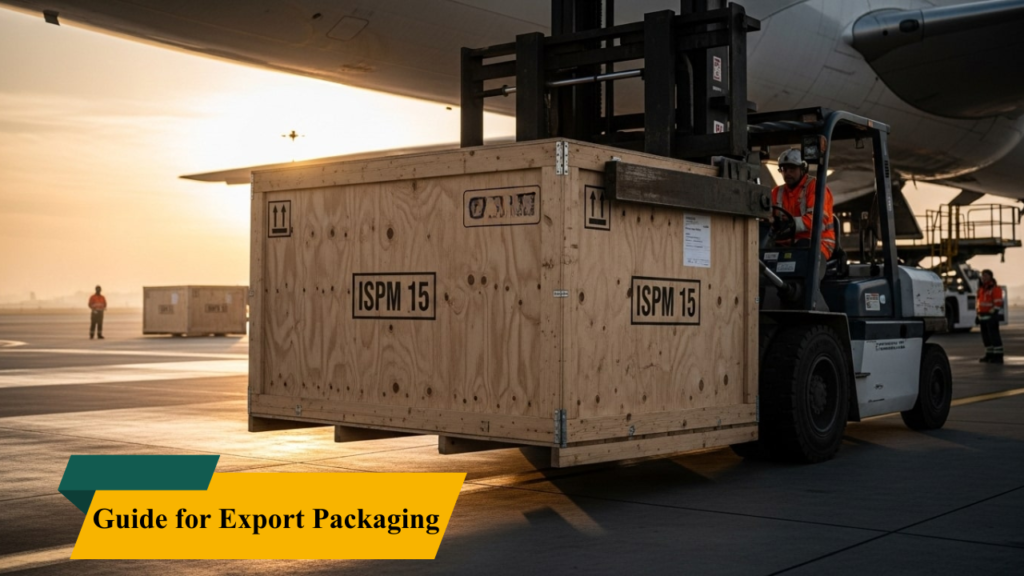
ISPM-15 certification means your wooden packaging has been treated at a registered facility, and the treatment has been verified and recorded. The wood then receives an official mark. This mark is what customs officers look for when a shipment arrives at any port.
The mark looks like a small wheat symbol. Next to it, you will see a country code, a facility code, and a treatment code. For India, the country code is IN. The treatment code HT means heat treatment was used.
This mark is the only proof that matters at customs. A certificate document alone is not enough. The mark must be physically on the wood.
In India, the National Plant Protection Organisation, commonly known as NPPO, is responsible for registering treatment facilities and ensuring they comply with the rules. Only wood treated at an NPPO-registered facility carries a valid mark.
Why Heat Treatment Is the Go-To Method
There are a few ways to treat wood under ISPM-15. Fumigation with methyl bromide was once very common, but most countries are phasing it out due to the environmental damage it causes. Another method, called dielectric heating, exists, but it requires specialized equipment and is not widely available.
Heat treatment is what most exporters use today, and for good reason.
The process is straightforward. Wood is placed inside an industrial kiln. The temperature is raised until the core of the wood reaches 56 degrees Celsius. It must stay at that temperature for at least 30 continuous minutes. This kills everything inside, insects, eggs, larvae, and most pathogens.
No chemicals. No residue. Just heat.
That last point matters more than people realise. Many buyers in Europe and Australia specifically prefer heat-treated pallets for export because they want packaging that has not been treated with chemical fumigants. It is a cleaner option for them, and increasingly it is becoming a preference rather than just a compliance checkbox.
After the wood comes out of the kiln and cools down, the ISPM-15 mark is stamped on all four sides. A treatment certificate with the date, temperature logs, and facility details is issued. That paperwork stays with the shipment.
Export Pallet Regulations in India
India has a clear system in place for this. Understanding export pallet regulations in India is not complicated once you know the key points.
NPPO manages everything. Any facility that wants to treat and certify wood for export must register with them, maintain proper equipment, keep accurate records, and pass regular inspections. If a facility fails an inspection, it loses its registration, which means its marks become invalid.
As an exporter, you are responsible for sourcing packaging only from NPPO-registered providers. That is the single most important thing you can do.
ISPM-15 applies to all raw wood packaging, pallets, crates, boxes, dunnage, cable reels, and wooden spools. The one thing it does not apply to is processed wood like plywood or particleboard, because manufacturing those products already eliminates any pests inside.
What Happens If Your Packaging Is Not Compliant?
This is where people learn the hard way.
Customs officers at most major ports check for the ISPM-15 mark as part of standard inspection procedures. If your wooden packaging does not carry a valid mark, the consequences are not pleasant.
Your shipment can be returned in its entirety. Or it gets quarantine treatment at the destination, and you pay for it. In some cases, the wooden packaging is destroyed on the spot. In rare situations, the entire consignment is rejected along with it.
Beyond the immediate costs, your buyer is left waiting. Relationships suffer. Future orders get reconsidered.
None of this is worth it when the solution is simply choosing a registered, reliable packaging provider before you ship.
What to Look for in a Wood Packaging Supplier
Not every supplier offering wooden pallets is NPPO registered. Some smaller operations cut corners. Here is what you should check before working with any supplier.
Ask for their NPPO registration certificate. It should be current. Request a sample treatment certificate from a recent batch. Check that the ISPM-15 mark on their pallets is clear, correctly formatted, and stamped on all four sides.
A supplier worth their salt will not hesitate to show you any of this. In fact, good suppliers often walk you through the process themselves.
Companies operating in this space also play a role beyond just treating wood. As third parties offering treatment and packaging services, they often help exporters understand which treatment is right for which destination, especially when buyers have specific requirements or when regulations in the destination country recently changed.
A Few Mistakes Worth Avoiding
Using leftover pallets from a previous domestic shipment. Domestic pallets do not need to be ISPM-15 compliant, so they often are not.
Assuming the mark on the old packaging is still valid. If the pallet has been used, repaired, or re-cut in any way after treatment, the mark is no longer valid.
Not checking destination-specific rules. Most countries follow ISPM-15, but some have additional requirements. A quick check with your freight forwarder before shipping saves a lot of trouble.
Conclusion
ISPM-15 is one of those things that seem like background admin until they’re not, until a shipment gets rejected and the losses are real. The good news is that compliance is genuinely not hard once you understand the process and work with the right people.
Heat treatment is clean, effective, and widely accepted. NPPO registration ensures accountability. And the ISPM-15 mark is your shipment’s entry pass into almost every country worldwide.
If you are an Indian exporter looking for packaging that clears customs without friction, start by verifying that your supplier is registered and that every pallet leaving with your goods carries a proper mark. Kamath Woods provides heat-treated pallets for export tailored to Indian exporters who cannot afford delays or rejections at international ports.
Get the packaging right. Everything else becomes easier.