

Plywood is one of those materials people see every day but rarely think about. It appears in wardrobes, kitchen cabinets, wall panels, doors, packing boxes, and parts of buildings. Most people know it is wood, but not many know why it is so useful or how it is made.
Plywood is not a wooden board. It is an engineered panel made by bonding thin wood sheets, called veneers, into one stable sheet. The grain of each layer is usually turned at a right angle to the next one. That cross-layer pattern gives plywood much of its strength and stability and helps reduce splitting and uneven movement compared with solid wood boards.
If you want to understand plywood properly, look at two things. First, where it is used. Second, the plywood manufacturing process behind it.
What Plywood Really Is
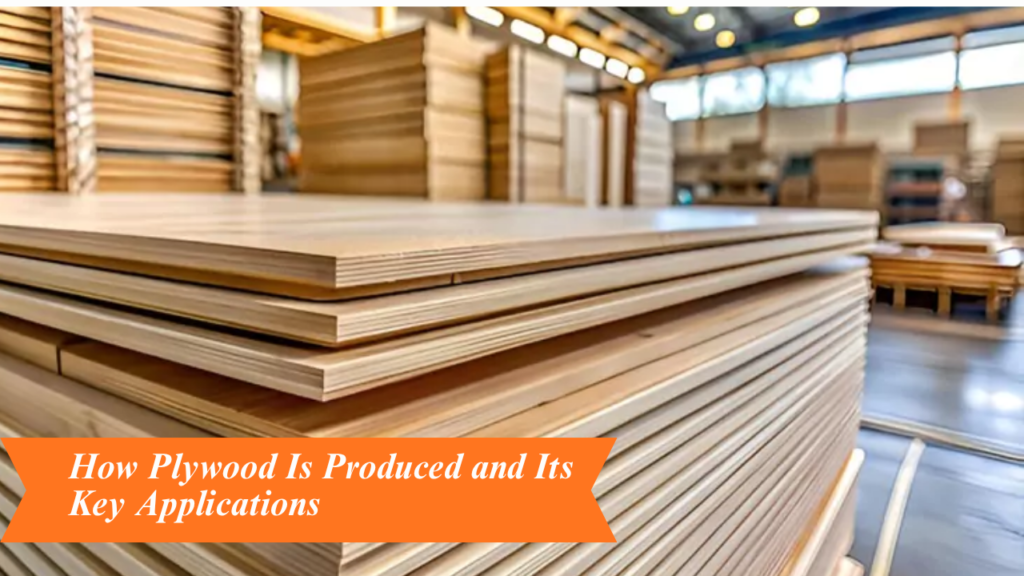
Plywood is a panel made from veneer sheets bonded together under heat and pressure. Industry definitions describe it as an assembly of veneer sheets with alternate grain directions, usually placed at right angles and arranged around a central ply or core.
That structure matters. A single plank of wood can shrink, swell, or crack more easily because all its grain runs in one direction. Plywood behaves differently because its layers support each other.
Why Plywood Is So Widely Used
Plywood has stayed popular for decades because it offers a practical balance of strength, workability, and stability. APA notes that plywood has a strong strength-to-weight ratio and good dimensional stability.
In simple terms, plywood is useful because:
- It is strong without being too heavy
- It cuts and handles easily
- It holds screws and nails well
- It comes in many thicknesses and grades
- It works for both structural and interior use
That is why plywood applications are so broad.
Common Plywood Applications
Plywood shows up in far more places than most people expect.
Furniture And Cabinets
This is one of the most common plywood applications. Plywood is used for wardrobes, cabinets, shelving, study tables, bed frames, drawer units, and office furniture. People use it because it gives a flat and stable base and works well under laminates, decorative veneers, paint, and polish.
Interior Work
Plywood is common in wall cladding, partitions, false ceilings, TV units, storage systems, and modular kitchens. It is useful where people need neat panel work that can be cut and fitted with some precision.
Construction Work
Plywood is also used in subfloors, roof decking, wall sheathing, and concrete formwork. APA specifically lists roof, wall, and floor uses among common panel applications in light-frame construction.
Doors And Panel Products
Many flush doors and decorative panels include plywood because it provides shape, support, and better stability than many cheaper sheet materials.
Packaging And Transport
Plywood is often used for crates, pallets, packing cases, and transit boxes. It handles stress better than weaker low-density boards.
The Basic Materials Used To Make Plywood
To explain how plywood is made, it helps to start with the raw materials. The list is simple:
- wood logs
- veneer sheets
- adhesive or resin
- heat and pressure
- trimming and sanding equipment
The most important part is the veneer. Veneer for Plywood Manufacturing forms the body of the board. The outer sheets affect surface appearance. The inner sheets, often called Core Veneer for Plywood, affect strength, balance, and internal stability.
Why Veneer Quality Matters
A plywood sheet is only as good as the veneers inside it. If the veneers are too wet, too thin in places, badly cracked, or poorly matched, the final board will usually show it. You may see weak bonding, surface unevenness, internal gaps, or movement over time.
This is why Core Veneer for Plywood matters so much. The face may look good, but the core decides whether the board holds up under real use. A good veneer for Plywood Manufacturing should have a fairly even thickness, proper drying, and fewer major defects before pressing begins.
How Plywood Is Made
Now, let us walk through the plywood production process in a simple, practical way.
1. Log Selection
The process starts with choosing the right logs. The species, shape, and straightness of the log all affect the veneer that comes later.
2. Debarking
The bark is removed before peeling. This keeps the wood surface cleaner and helps the next stage run properly.
3. Veneer Peeling
This is a key step in how plywood is made. The log is placed on a rotary machine and peeled into long, thin veneer sheets. Britannica describes plywood as being made from veneers that are glued together.
4. Veneer Drying
Fresh veneer holds moisture. It cannot go straight into production in that state. The sheets are dried so they reach a suitable moisture level for bonding and pressing. This helps reduce later problems like shrinkage, poor glue bonding, and warping.
5. Veneer Grading And Sorting
Once dried, the veneer sheets are sorted. Cleaner sheets may be chosen for the outer faces. Inner sheets become Core Veneer for Plywood. Sorting matters because each layer plays a different role in the finished board.
6. Adhesive Application
Glue is spread across the veneer sheets. The kind of adhesive depends on whether the plywood is intended for dry interior conditions or more moisture-prone use. Britannica notes that plywood layers are bonded by gluing, and APA explains that heat and pressure are used to create the final panel.
7. Layer Assembly
The veneers are stacked one over another. The grain direction is changed from one layer to the next. This cross-grain arrangement is central to the plywood manufacturing process because it helps create balance and strength in the sheet.
8. Hot Pressing
The stacked veneers go into a press where heat and pressure bond them into one board. This stage is critical. If pressure, temperature, or timing are wrong, the sheet may not bond properly.
9. Trimming And Sanding
After pressing, the panels are trimmed to size and sanded. This improves shape, smoothness, and surface readiness for later finishing.
10. Final Inspection
The finished boards are checked for thickness, bonding, size, and visible quality issues.
Why The Core Makes Such A Big Difference
A lot of buyers focus on the top face because that is what they can see. But the true performance of plywood often depends more on the middle than on the surface. Core Veneer for Plywood affects:
- internal bonding
- panel strength
- screw-holding performance
- stability during use
- long-term durability
That is why the plywood production process cannot be judged only by the outside look of the sheet.
Final Thoughts
Plywood is widely used because it solves real problems. It gives people a panel that is strong, workable, and more stable than many wooden boards. Its value comes from both its uses and the way it is built. The plywood manufacturing process matters at every stage, from log selection to veneer drying, gluing, pressing, and finishing. Good Veneer for Plywood Manufacturing and a reliable Core Veneer for Plywood are what turn raw wood into a useful board people can trust. To learn more, Kamath Woods is a good place to start.