

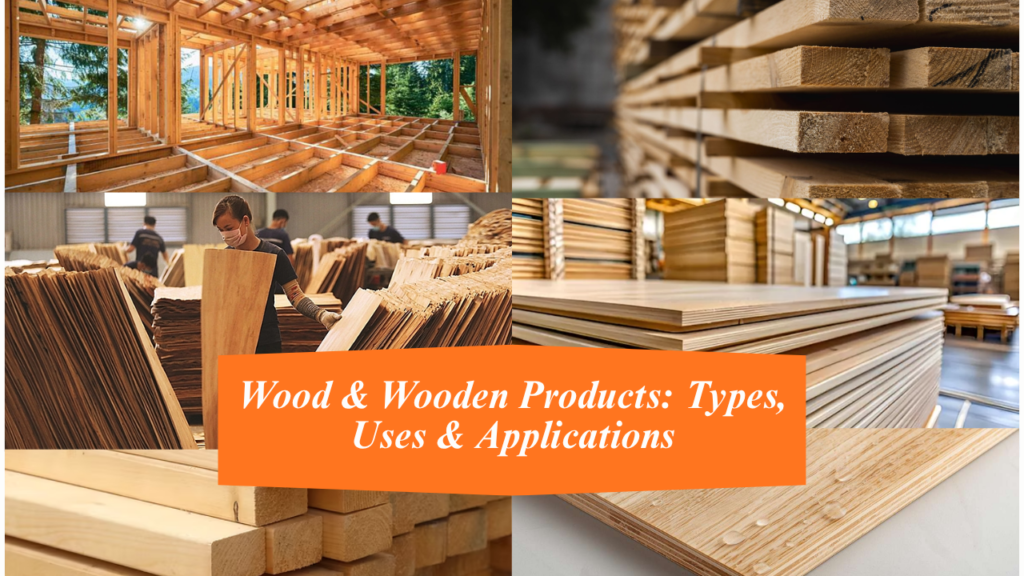
Wood is used in more ways than most people notice. It supports buildings, protects cargo, forms furniture parts, and helps make plywood and block board. But wood is not one single product. It comes in different forms, grades, sizes, and finishes. That is why understanding wood properly matters before choosing it for any job.
At Kamath Woods, the product range shown on the website is focused on practical industrial and commercial use. The company highlights pine sawn timber, pine wooden pallets, pine and plywood boxes, pine and plywood crates, and eucalyptus core veneer for plywood and blockboard.
It also explains that East African pine is widely accepted in construction and packaging and is used for framing, pallets, crates, posts, cladding, treated decking, trims, and everyday furniture.
Why It Helps To Understand Wood Properly
A lot of buying mistakes happen because people use the word “wood” too broadly. In real use, wood must match the job. Timber used for framing is not chosen the same way as the veneer used inside plywood. A pallet used for export is not the same as a wooden box used for a custom cargo load.
This is why learning about the types of wood and wooden products is useful. It helps buyers, builders, manufacturers, and logistics teams choose better materials. It also helps avoid waste, weak performance, and wrong product selection.
The Main Types Of Wood Used In Practical Work
When people talk about different types of wood, they often think only about tree species. That is part of the picture, but not the full picture. In practical supply and manufacturing work, wood is often grouped in two simple ways:
- By species
- By product form
Species tells you what tree the wood came from. Product form tells you how the wood is prepared and how it will be used.
Pine is used in sawn timber and packaging products. Eucalyptus is used as a core veneer for plywood and blockboard.
Pine Sawn Timber And Where It Is Used
Pine sawn timber is one of the most widely used wood products because it is practical, versatile, and suitable for many industries. Pine sawn timber is for construction, packaging, pallets, and interiors. The website also shows common grades such as A, B, ADS, and S2S/S4S, along with standard sizes and optional kiln drying, heat treatment, and fumigation-related processing.
This tells us something important. Pine timber is not only a raw material. It is a working material that can be prepared in ways that suit different jobs.
Common uses of wood in pine sawn timber form include:
- Framing work
- Interior trims
- Packaging support
- Pallet production
- Crate building
- Industrial components
- Furniture in simple applications
- Construction support members
The construction and packaging industries extensively accept East African pine. That makes pine especially useful where steady sizing, easy processing, and broad industrial use matter.
Wooden Pallets And Their Practical Use
Wooden pallets are one of the most important wood products in transport and storage. They are used every day in factories, warehouses, export units, logistics hubs, and industrial supply chains. Their main purpose is simple. They make cargo easier to handle, stack, store, and move safely.
We offer a range of pinewood pallets that comply with ISPM-15 standards, making them suitable for international shipping. Their product lineup includes entry types such as standard 2-way, 3-way, and 4-way pallets, as well as specialized options like EPAL-sized pallets and chemical pallets designed for specific industrial uses. They also provide pallets in common standard dimensions, including 1000 × 1200 × 150 mm. Additionally, heat treatment in accordance with ISPM-15 guidelines is available as an optional feature, which helps ensure smoother cross-border transportation by meeting global phytosanitary requirements.
This is important because not all pallets serve the same need. Some are made for local handling. Some are built for export. Some are made to match specific industry load needs.
In simple terms, pallets are used for:
- Export shipments
- Warehouse stacking
- Forklift handling
- Factory dispatch
- Chemical or industrial cargo support
- Repeated movement of bulk goods
So when people think about the types of wood used in real business settings, pallets are a major part of that picture.
Wooden Boxes And Crates For Packaging
Boxes and crates are another major category of wooden products. While they may sound similar, they are not always used in the same way. In many cases, boxes provide greater enclosure, while crates are used for structural cargo support, where visibility, strength, and ventilation may matter more.
We also offer pine and plywood boxes that are fully customizable in height, wall type, and load rating. It also offers pinewood crates with standard footprints and cargo-based customization. Both product groups can be supplied with optional ISPM-15 heat treatment.
This shows how wooden packaging is not a one-size-fits-all product. It is shaped around cargo and application.
Common uses of wood in boxes and crates include:
- Machinery packing
- Industrial shipment support
- Fragile equipment transport
- Export packing
- Heavy load containment
- Storage before dispatch
Wood remains strong in this area because it is easier to customize than many other packaging materials.
Veneer And Its Role In Plywood And Block Board
Veneer is a very different product from sawn timber. It is thinner, more specific in use, and is usually incorporated into another manufactured board product. Eucalyptus core veneer is suitable for use in plywood and blockboard manufacturing. The veneer is sourced from Tanzania and is available in multiple thicknesses, including 1.7 mm, 1.8 mm, and 2.2 mm, providing flexibility for different production requirements.
This matters because veneer is not chosen for the same reasons as timber. It is selected for board making, layer formation, and internal structural use in panel-based wood products.
In simple terms, veneer is used for:
- Plywood manufacturing
- Block board production
- Layered wood panel construction
- Controlled board thickness building
- Core structure inside finished panels
When discussing different types of wood, it is useful to include both solid wood and processed wood forms, such as veneer.
How Product Form Changes The Application
The same broad wood family can serve very different industries depending on how it is processed.
For example:
- Pine as sawn timber supports construction, packaging, and interiors
- Pine as pallets supports logistics and warehouse movement
- Pine crates and boxes support cargo handling and export packing
- Eucalyptus as a core veneer supports plywood and blockboard manufacturing
This is why product form matters just as much as species. A buyer should not only ask, “What wood is this?” The better question is, “What job is this wood prepared to do?”
Why East African Pine Stands Out
East African pine is a widely available plantation timber accepted by the construction and packaging industries. It also notes that the most common species in East African regions such as Kenya, Uganda, Tanzania, and Rwanda include Pinus patula, Pinus elliottii, and Pinus caribaea.
That matters because a dependable timber source supports consistency. In practical supply work, consistency is just as important as strength. Buyers often need steady dimensions, repeat quality, and predictable use across ongoing orders.
Choosing The Right Wooden Product
The best product choice depends on the end use. That choice usually becomes easier when you ask a few basic questions:
- Is the wood needed for building, packaging, interiors, or manufacturing?
- Does it need to handle cargo load?
- Does it need export treatment?
- Does it need smooth sizing or surfacing?
- Will it become part of plywood or blockboard?
- Is customization needed?
These questions help narrow down the right material much faster than choosing by appearance alone.
Choose Wood With Purpose
Wood works best when it is chosen with purpose. That means matching the material to the real job, not just buying what looks common or cheap. Pine sawn timber, wooden pallets, boxes, crates, and eucalyptus core veneer all solve different problems. When used correctly, each one brings practical value to construction, packaging, logistics, interiors, or panel manufacturing.
For businesses and buyers who want help choosing the right product for the right application, Kamath Woods is a good place to start that conversation.