

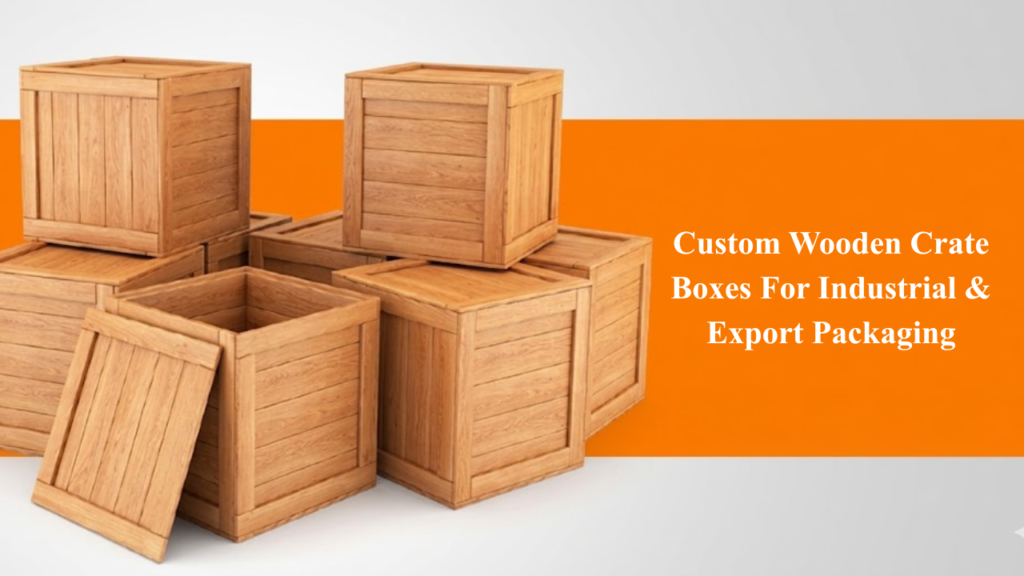
Industrial shipping is not simple. Goods move through loading bays, trucks, warehouses, ports, forklifts, and long transit routes. Along the way, they face impact, weight pressure, shifting, moisture, and rough handling. That is why packaging matters so much. When the product is heavy, valuable, fragile, or irregularly shaped, standard packaging often does not provide sufficient protection. In those cases, custom wooden crate boxes become a practical solution because they are built around the load, not the other way around.
This is where wooden shipping crates and boxes play an important role. They are used to protect industrial goods during storage, handling, and export movement. Kamath Woods offers pine wooden crates and boxes for industrial and export use, with customization options based on cargo type, handling needs, and shipment requirements. The site also notes that ISPM-15 heat treatment is optional for smoother cross-border movement.
Why Standard Packaging Is Not Always Enough
A standard carton or off-the-shelf box may work for small and simple items. Industrial cargo is different. Machinery parts, fabricated components, electrical systems, tools, and export assemblies often need stronger support. They may have unusual dimensions. Some loads need open structural support. Others need enclosed protection. Some need to be packed in a way that works with forklifts, lifting points, and stacking rules.
That is why custom design matters. Good packaging starts with the product itself. Size, weight, fragility, handling method, and shipping route all affect the final design of the crate or box. Kamath Woods highlights that its boxes and crates are customizable and built to meet industrial handling and client requirements, which reflects this practical approach.
What Makes Wooden Crates And Boxes Useful
Wood remains one of the most trusted packaging materials for industrial transport. It is strong, easy to size, and easier to adapt for heavy or odd-shaped cargo than many other packaging materials. It also works well when extra internal support is needed.
This is one reason packing wood is still widely used across industries. A properly built wooden crate or box can support the load, reduce movement, and make handling safer. It can also be designed for repeated movement, export treatment, and custom closures.
Kamath Woods focuses on pine-based packaging products, including pine wooden crates and pine wooden boxes. Its website also explains that East African pine is widely accepted in packaging industries and is used in pallets, crates, and related products. That makes pine a practical material in packaging where consistency and workability matter.
Wooden Crates And Wooden Boxes Are Not The Same
People often use the words’ crate’ and ‘box’ as if they mean the same thing. In practice, they are different.
A wooden box is usually more enclosed. It is often used when the contents need more full coverage from the outside. This can help protect against dust, contact, and general shipping exposure.
A wooden crate is usually more structural. It is built to support the load while allowing a more open frame design in some cases. Crates are often useful when the cargo is heavy, large, or easier to secure within a framed structure.
Kamath Woods offers both pine wooden boxes and pine crates, and describes both as customizable for industrial and export use, which shows that the right choice depends on the cargo, not just the product name.
Where Custom Wood Crates Help Most
Custom packaging is most useful when the shipment is complex. That includes goods such as:
- Machinery parts
- Industrial equipment
- Electrical panels
- Fabricated metal components
- Export assemblies
- Fragile cargo with special support needs
- Oversized loads
- Heavy items that require forklift handling
In these situations, custom wood crates for shipping help because they can be built around exact dimensions and actual weight conditions. This reduces empty movement inside the package and improves support during transport.
Kamath Woods states that its finished products are built around client requirements and can also include knock-down packaging solutions, where components are supplied and assembled or packed on-site to suit space, handling, or custom needs. That is useful when cargo or site conditions require more flexibility.
Why Export Packaging Needs Extra Attention
Export packaging has more demands than local transport. A shipment may cross long distances, pass through customs checks, and face different climate conditions. It may also need to meet phytosanitary rules for wood packaging.
That is why treatment and compliance matter. Kamath Woods states that it provides ISPM-15-compliant wood packaging and that pallets, crates, and boxes can be heat-treated for smoother cross-border movement. This is especially important for companies sending goods outside the country, where untreated wood packaging can lead to delays or rejection.
For export work, packaging should not be chosen only by appearance or price. It should be chosen by function, treatment status, cargo safety, and shipping conditions.
Key Things A Good Industrial Crate Should Do
A strong crate or box should do more than hold a product. It should support the full movement process. In simple terms, good industrial wooden crate packaging should help with:
- Load support
- Safer lifting and movement
- Better cargo stability
- Reduced shifting in transit
- Better fit for the product
- Export readiness where needed
- Easier handling at warehouses and ports
This is why crate design should be based on real shipping conditions. A poorly designed package may still look fine when it leaves the factory, but fail when it is lifted, stacked, or moved over a long route.
Why Material Choice Still Matters
Not all wood performs the same way in industrial packaging. The material used affects weight, strength, treatment performance, and ease of fabrication. Kamath Woods points to pine as the dominant practical choice for many export packaging applications because it is lighter, easier to work with, and widely used for pallets and crates. It also explains that hardwood is well-suited to heavier-duty applications, but pine remains a common and efficient option for general export packaging.
That helps explain why pine-based wooden shipping crates are so common. They offer a balance between strength, workability, and packaging efficiency.
Custom Packaging Starts With The Cargo
The most important idea in this topic is simple. Good packaging starts with the cargo, not with a standard template. Before choosing a crate or box, the shipper should consider size, weight, fragility, route, handling method, stacking requirements, and export destination.
That is what makes custom packaging useful. It reduces guesswork. It also helps avoid damage, wasted space, and packaging that is too weak or unnecessarily oversized.
Choose Packaging That Matches The Job
Custom wooden crate boxes are not only about building something strong. They are about building something suitable. The right design protects the load, supports handling, and improves export readiness. That is why packing wood, crates, and boxes still matters so much in industrial shipping.
For businesses that need custom wood crates for shipping or reliable industrial wooden crate packaging built around real cargo needs, Kamath Woods is a practical place to start the conversation.