

When people buy plywood, most of them look at the surface first. They check whether it looks smooth, clean, and even. That is understandable, but it does not tell the full story. The real strength of plywood lies within. It comes from the way the board is built and, more importantly, from the quality of the core veneer
If the inner layers are weak, the sheet will not stay strong for long. It may bend, crack, lose shape, or fail under load. That is why Core Veneer for Plywood matters so much. It is not just a middle layer. It is the part that helps the board carry weight, hold fasteners, and stay stable over time.
This article explains which core veneer is best for plywood strength, how moisture affects the result, and why the plywood manufacturing process matters just as much as the wood itself.
What Core Veneer Really Does
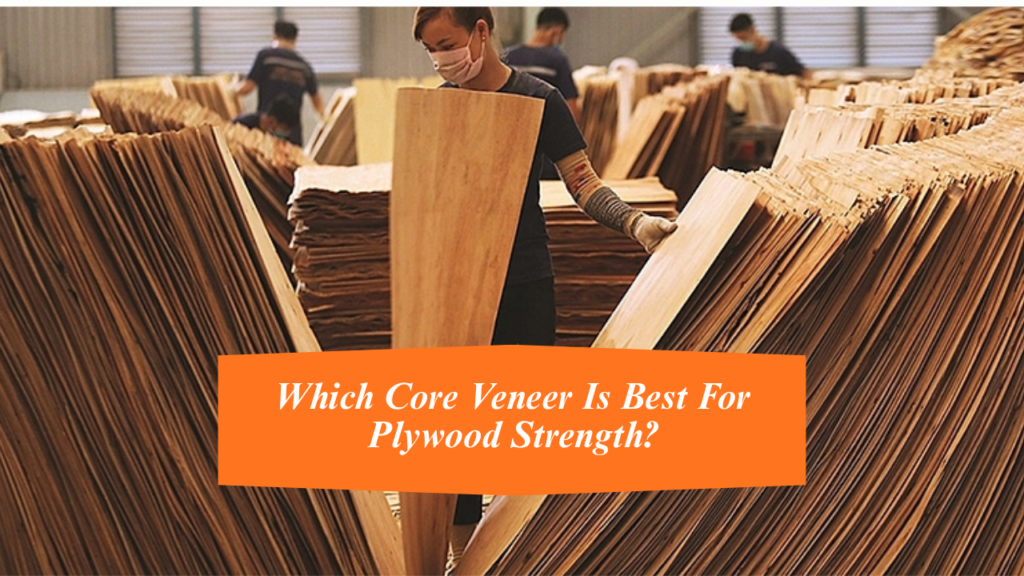
Plywood is made by bonding thin sheets of wood veneer together. These sheets are placed in alternating grain directions. This cross-layer structure is what gives plywood its strength and helps it resist splitting and warping. The face veneer may decide how the board looks, but the core layers decide how the board performs.
The core veneer supports the full sheet from within. It helps the plywood stay flat, improves screw-holding strength, and gives the panel better resistance to bending. A strong face with a weak core is still a weak board. That is why choosing the right core veneer is one of the most important decisions in plywood production.
Which Core Veneer Is Usually Best
If strength is the main goal, dense and sound hardwood core veneer is usually the better choice. Hardwood veneers tend to have better load-bearing capacity than lighter, softer alternatives. They also give the panel a firmer inner structure, which helps during cutting, fastening, and long-term use.
That does not mean every hardwood core is automatically good. The veneer must also be uniform, properly dried, and free from major gaps, splits, and weak patches. A strong species can still perform badly if the veneer quality is poor. In the same way, a decent mixed core can work well if the layers are consistent and the bonding is done correctly.
In simple terms, the best Core Veneer for Plywood strength is usually a well-graded hardwood core with even thickness, proper bonding, and controlled moisture.
Why Veneer Quality Matters More Than Wood Name Alone
People sometimes focus too much on species names. Species matters, but veneer quality matters just as much. A good core veneer should be:
- even in thickness
- properly dried
- free from major knots and splits
- laid up without large gaps
- bonded evenly under pressure
If the veneer has overlaps, holes, or poorly repaired sections, the sheet loses strength. If moisture levels are too high, bonding becomes less reliable, and the risk of swelling or separation increases. Veneer drying is a critical step because proper drying supports good adhesion and dimensional stability.
So the right answer is not just “hardwood” or “softwood.” The better answer is a sound, dense, properly dried veneer that has been processed well.
Hardwood Core Vs Softwood Core
Hardwood core veneer is often preferred for stronger plywood because it is denser and usually better at handling stress. It is a practical choice for furniture frames, cabinets, partitions, and applications where the sheet needs to stay firm.
Softwood core veneer can still be useful, especially where lower weight matters more than maximum strength. It may be easier to handle and sometimes costs less, but it is not always the best choice when the board must take repeated stress or heavier loads.
A mixed core can sit somewhere in the middle. It may balance cost and performance, but results depend heavily on manufacturing quality. That is why buyers should look beyond labels and ask how the panel is built.
Why Moisture Content Cannot Be Ignored
One of the biggest factors behind plywood strength is moisture control. Wood is a natural material. It reacts to humidity. If the veneers are too wet during production, the bonding can suffer. If the finished board carries the wrong moisture level, it can change shape later. It may swell, shrink, or warp in storage or in use.
This is where plywood moisture content standards become important. Indian Standard IS 303 states that plywood moisture content should be not less than 5 percent and not more than 15 percent when tested under the specified method.
Within that wider accepted range, many manufacturers aim for a tighter working range because bonding and stability improve when moisture is controlled carefully.
Industry sources commonly describe the ideal moisture content for plywood core and finished plywood as around the mid-single to low-double digits, often 7 to 12 percent, depending on product type and conditions.
That matters for strength because a stable core bonds better and stays more reliable after installation.
How The Plywood Manufacturing Process Affects Strength
Even the best veneer can lose its value if the plywood manufacturing process is poor. Good plywood does not happen by accident. It depends on several steps being done properly.
The process usually includes:
- log selection
- peeling the veneer
- drying the veneer
- applying adhesive
- laying veneers in the cross direction
- hot pressing and finishing
Drying is especially important because wet veneer can reduce bonding quality. Pressing also matters because uneven pressure can leave weak bonding lines inside the panel. The cross-laminated structure itself is central to plywood performance because it improves dimensional stability and distributes stress more evenly across the sheet.
So when asking which core veneer is best, the honest answer includes both the wood and the process. Good core veneer only becomes strong plywood when manufacturing is controlled well.
How To Judge A Strong Core In Real Terms
For practical buying decisions, focus on a few simple checks.
Look for plywood that has:
- a consistent and solid inner build
- No visible core gaps at the edge
- proper flatness
- reliable bonding
- balanced weight and firmness
Ask whether the product follows plywood moisture content standards. Ask whether the veneers are properly dried. Ask what kind of core construction is used. These questions matter more than surface polish alone.
Final Thoughts
The best core veneer for plywood strength is usually a sound hardwood core that is evenly built, properly dried, and bonded through a controlled plywood manufacturing process. Species matters, but quality control matters just as much. If the core is weak, the sheet will be weak as well. If the core is stable, dense, and well-bonded, the plywood has a much better chance of lasting.
That is the real point behind choosing the right core veneer. Strength starts inside the board. That is where durability begins. If you want plywood that performs well in real use, look past the face and focus on the core.
For anyone seriously comparing options, start with the inner build and ask better questions before buying. To understand what that standard should look like, take a closer look at Kamath Woods.