

Wood has been defining human civilization since thousands of years, at least literally. From those timber frames in the ancient temples, to the smooth furniture in our contemporary houses, wood is one of the most useful and reliable materials we possess. Not every wood product is produced in a similar manner. It is a manufacturing process behind every piece of wood plank, every panel, every package, which predetermines its strength, outlook, and use.
We have been dealing with wood too long to be surprised that knowing how timber is treated is what makes the difference when it comes to specifying materials as an architect, sourcing packaging as a manufacturer, and finding the right wood solution as a business. This is a simple overview of the six major categories of wood manufacturing processes and what distinguishes each of them.
1. Solid Wood Processing (Sawmilling)
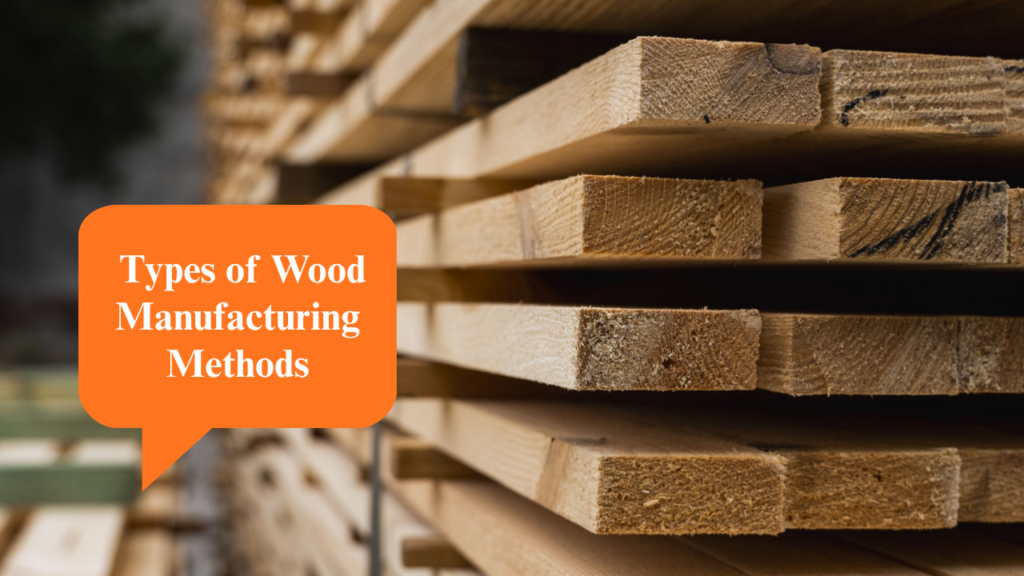
This is where it all begins. Sawmilling is the most foundational method in timber production. Logs are fed through large band saws or circular saws that cut them into planks, beams, and boards of varying dimensions. The output — called sawn timber or solid wood — is as natural as it gets. No adhesives, no fillers, just the real thing.
Solid wood processing is the backbone of structural applications. Think floor joists, roof beams, door frames, and window sills. The quality of the final product depends heavily on the species of tree, the direction of the cut (tangential, radial, or quarter-sawn), and the drying process that follows.At Kamath Wood, our timber offering is rooted in this tradition — carefully processed to maintain the natural integrity of the wood while meeting modern dimensional standards.
2. Seasoning and Kiln Drying
Wet wood is full of moisture – up to 100 percent of the dry weight. That moisture must be removed prior to the wood being utilized with any trust. This moisture content is removed by a process known as seasoning, and this can occur in two ways: air drying (leaving the wood piled up in open yards over several months or even years) or kiln drying (applying a controlled heat and air flow in order to hasten the process much faster).
Today, the manufacturing of wood products is done by kiln drying due to the fact that the industry has accurate control of the moisture content in wood products. This is important since wood that is wet will curve, contract or crack once installed or put in use. Dried timber is stable in dimension, does not support fungi, and is much easier to work with.
This is not a glamorous step and leave it out and all the downstream loses.
3. Engineered Wood Manufacturing
Engineered wood is what happens when you take wood’s natural strengths and compensate for its natural weaknesses. Products like plywood, MDF (medium-density fibreboard), LVL (laminated veneer lumber), and OSB (oriented strand board) are all forms of engineered wood.
The manufacturing process involves breaking down wood fibres, veneers, or strands and then reconstituting them with adhesives under heat and pressure. The result is a material that’s often more dimensionally stable than solid wood, more consistent in quality, and capable of being produced in larger dimensions than nature allows.
Engineered wood has become central to modern construction, interior design, and furniture manufacturing. It’s particularly useful in applications where a large, flat, uniform surface is needed — something solid wood alone can rarely deliver at scale.
4. Pine Wood Packaging Manufacturing
One of the most practical and commercially significant areas of wood manufacturing is packaging, and pine wood packaging, in particular, has carved out a dominant role across industries. Pine is favoured for packaging because it’s widely available, relatively lightweight, easy to work with, and strong enough to handle heavy industrial loads.
The manufacturing process for pine wood packaging involves cutting, planning, and assembling pine timber into crates, pallets, boxes, and other containment structures. Strength, nail-holding capacity, and resistance to impact are all key considerations. In industries like pharmaceuticals, engineering, automotive components, and heavy machinery, pine wood packaging isn’t optional — it’s essential.
Packaging made from pine also meets ISPM 15 phytosanitary standards when heat-treated, making it suitable for international shipping. If your supply chain crosses borders, this matters enormously.
5. Moulding and Millwork
After drying and surfacing timber can be moulded to particular profiles. Millwork is a general term used in reference to wood products that are machined to finished forms – trimming boards on the skirting, architrave, cornice, handrail, window profiles and decorative trims are all considered millwork.
The machines employed in this operation (moulders, routers, spindle shapers) can be used to create very accurate and repeatable profiles at a high rate. Architects and interior designers can use custom millwork to specify precise millwork sizes and sizes and profiles to have creative control over the eventual appearance of a space.
This is a technique that lies between the production of accuracy and the art. The result is not just functional, but also aesthetic, it is that wood that serves a structural purpose and also adds the visual aspect to a building or interior.
6. Surface Finishing and Treatment
Finishing and treatment is the last step in most wood manufacturing processes – processes which guard the wood, offer it an attractive look, and set it up for its purpose. This involves sanding, planing, painting, staining, varnishing, oiling and preservative treatments.
In exterior use, pressure treatment with preservatives increases the life of timber significantly by guarding against water, bugs and fungi. In the case of interior furniture and flooring, the finishing processes improve the grain, provide colour and provide clean and maintenance free surfaces.
Surface finishing is not merely cosmetic. The appropriate treatment may increase or even triple the life of a wood product, particularly in challenging conditions – along the coastline, in an industrial area, or in a crowded community.
Why Manufacturing Method Matters
Each of these six methods produces wood that behaves differently, costs differently, and suits different applications. A structural beam needs to come from a properly seasoned solid timber. A flush door needs the dimensional stability of an engineered board. An export crate needs pine wood packaging that meets international phytosanitary standards. The wrong method for the wrong application leads to waste, failure, and unnecessary cost.
Understanding the manufacturing process behind your wood products helps you make smarter sourcing decisions — whether you’re building, packaging, or designing.
At Kamath Woods, we work across this full spectrum of wood product manufacturing, bringing together quality raw materials, experienced processing, and reliable supply.
Wood, done right, is built to last. So is a good supplier relationship.